
Why Glue-on Shoes
The earliest hoof protection dates back to the 5th century BC, and was comprised of leather or rawhide. These “hipposandals” were wrapped around the hoof and held in place by a strap, creating a removable covering. Crecent or “U” shaped metal, which was applied by nail, first made an appearance around AD 900, but did not become common in Europe until 100 years later. Though science of hoof mechanics and the availability of new materials have begun a much delayed revolution in hoof protection, nearly 1000 years later, we find the metal, nailed on shoe still remains a predominant form of hoof protection.
While I firmly believe traditional farriery will continue to play an important role in equine care, weighing all the research and options available to protect a hoof in our modern times, I found glue on or composite shoeing more in-line with the horse-centric values I have built my business upon.
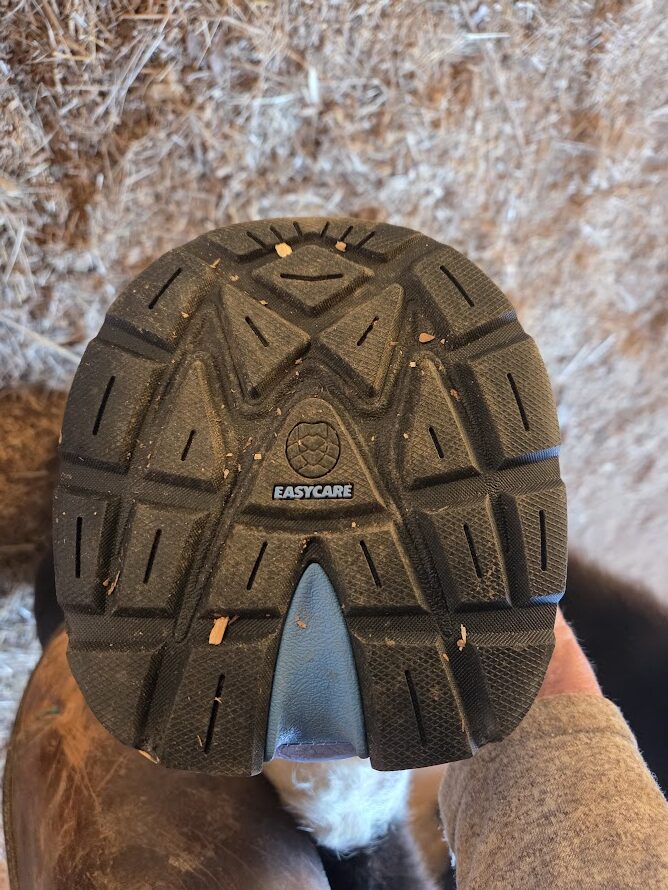
Pros of Composite Shoes
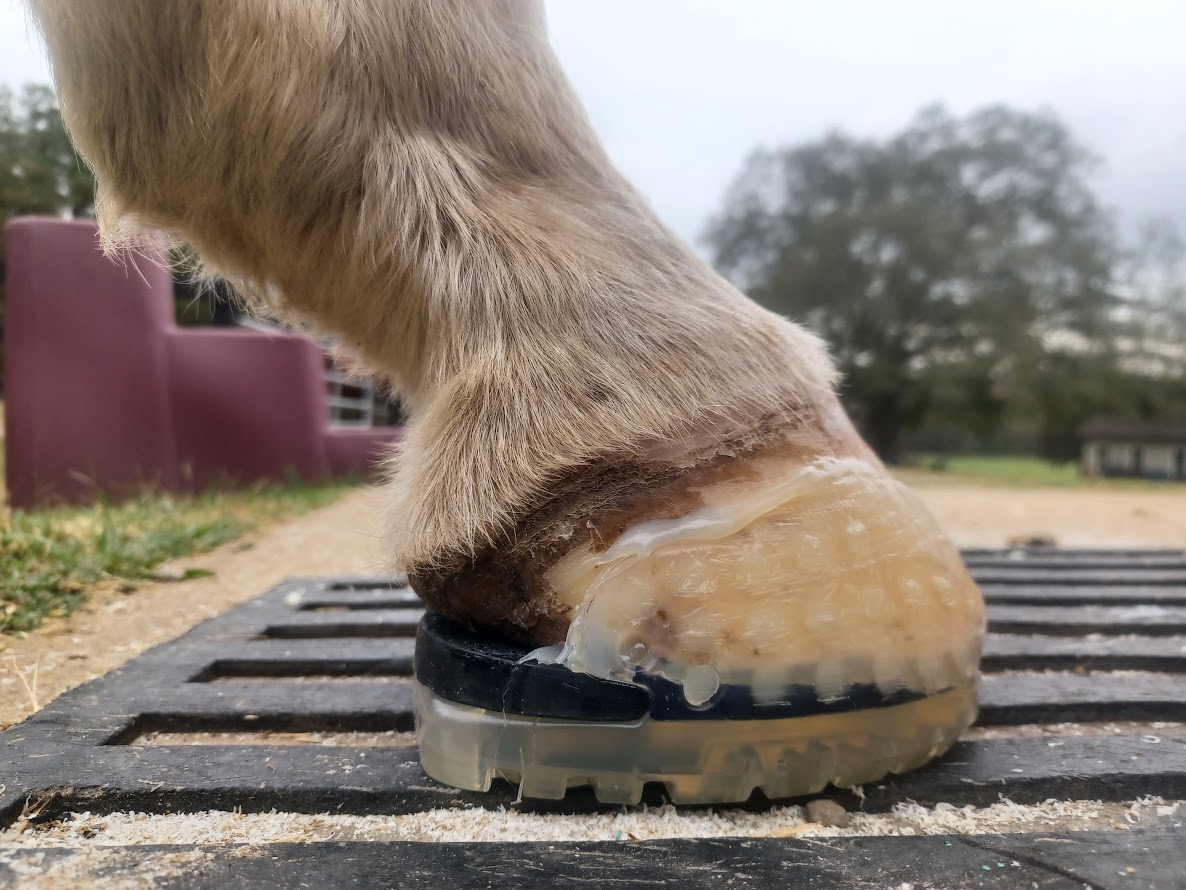
Without compromising the hoof with nail holes, we can still provide long term hoof protection solutions
Reduced risk of injury: Less likely to cause injury or damage to the hoof wall compared to metal shoes
Shock absorption: Offers better cushioning and shock absorption, which can be beneficial for horses with sensitive feet or joint issues.
Flexibility: More flexible, providing a more natural feel and movement for the horse.
Caudal support: Provides better support to the back part of the hoof (the caudal region), which can help improve overall balance and comfort.
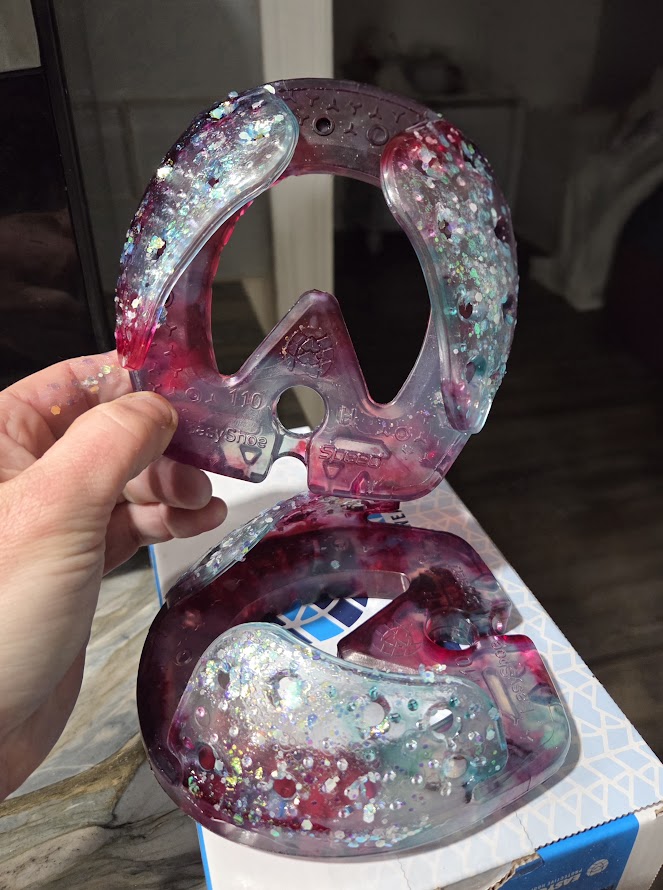
Traction options: Available in a variety of materials and designs, offering customizable traction for different terrains.
Frequently Asked Questions
How long do they last?
A full trim cycle. Some shoes may be reset at a savings to the client depending on wear and the glue used at application. I cannot guarantee my ability to reuse a shoe until I remove it and check integrity.
Why are they more expensive than traditional shoes?
On a more equal comparison, they aren’t! I find when this question arises, someone is comparing the price of the glue on shoe to the price of an open heeled metal shoe with no additional padding or caudal support. This is truly an apples to oranges comparison! However, when compared to a complete package with caudal support, glue on shoes are comparable in price to metal options. I will always advocate for caudal support when it comes to hoof protection. The back of the foot contains vital structures often ignored by old fashioned approaches.
Will a shoe glued on really stay on?
Yes. Many of the negative experiences with retention are related to earlier versions of glue on shoes, and the glue available. Great strides have been made over recent years to both the attachment apparatus of the shoe, and the adhesives available. While a horse can pull off anything – glue on shoe, metal shoe, boot or cast – we find no decrease in retention with glue on shoes vs nailed on options.
What special Care is Required while my horse is in glue on shoes?
Just like traditional shoes, glue on shoes do not negate the need for regular hoof hygiene. Some packages may cover the whole bottom of the hoof, in which case sprays or liquid cleaners are useful. Debris should be cleaned from the back and bottom of the shoe as usual. I do ask bell boots be used to reduce the risk of a horse pulling a shoe.
Why would my horse need glue on shoes?
My goal is for as many horses as possible to live comfortably barefoot. I truly believe it is better for them – and it is certainly kinder to your wallet. However, pathology, living conditions, workload, prior injuries and even genetics may predispose a horse to require hoof protection in order to work or live comfortably. I understand booting is not an option in some environments, and a more permanent solution is necessary for these instances. Not every horse in glue on shoes has a “foot problem”. I have clients with arthritis, soft tissue injuries or even less than ideal conformation that simply go better when we use glue ons to support them.
What can I expect at a glue on appointment?
A half set typically take an hour. This is usually longer for the 1st set, as I take my time to assess options and see what modifications each hoof may require. This can me a long time for a horse to stand, and I am in favor of anything that makes the situation easier for everyone, including offering hay nets, or giving CBD cookies prior to beginning. In the case where a horse is very uncomfortable, light sedation may be the kindest option. Speak with your vet in advance to discuss.
I do require a clean, dry space in which to work with the adhesives. Hooves should be clean and dry. I can work with some moisture, but hooves should not be saturated.
What if a shoes comes off?
I guarantee glue on shoes for the first 3 weeks if the following conditions are met:
- Horse is able to stand for the glueing process. Excessive movement during glue set up can compromise the bond. Your horse doesn’t need to be a statue, but should have the ability to stand calmly for several minutes.
- Environment for application in clean and dry. Moisture and debris can interfere with the adhesive.
- Horse is kept in bell boots that cover the back of the shoe.
If your horse still losses a shoe, just reach out. I do my best to address these issues within 2 business days. If possible, please locate the shoe to expedite the process and help me keep my prices reasonable.
.
Got questions?
Feel free to reach out.